Fire safety inspections are a critical part of regulatory enforcement in the United Kingdom. For business owners, landlords, and facilities managers, being unprepared for an inspection can result in enforcement notices, fines, operational disruption, and reputational damage. A Fire Safety Inspection for Commercial Property is designed to ensure that buildings are safe for occupants and compliant with UK fire safety legislation.
This guide explains how to prepare your commercial property for a fire safety inspection, what inspectors typically look for, and how proactive preparation can reduce risk and demonstrate compliance.
What Is a Fire Safety Inspection?
A fire safety inspection is an official assessment carried out by a fire authority or enforcing body to verify compliance with fire safety legislation. Inspectors assess whether appropriate fire safety measures are in place and whether the responsible person has fulfilled their legal duties.
Inspections may be routine, risk-based, or triggered by complaints, incidents, or non-compliance concerns. Regardless of the reason, preparation is essential.
Legal Responsibilities for Commercial Property Owners
Regulatory Reform (Fire Safety) Order 2005
The Regulatory Reform (Fire Safety) Order 2005 applies to almost all commercial premises in England and Wales. Under this legislation, the “Responsible Person” must take reasonable steps to reduce fire risk and protect occupants.
Legal duties include:
- Carrying out a suitable and sufficient Fire Risk Assessment
- Implementing appropriate fire safety measures
- Maintaining fire safety systems and equipment
- Providing fire safety information and training
- Reviewing and updating fire safety arrangements
Failure to meet these duties can lead to enforcement action or prosecution.
Why Preparation Is Essential
Preparing for a Fire Safety Inspection for Commercial Property is not about short-term compliance. It demonstrates ongoing commitment to safety and risk management. Proper preparation:
- Reduces the likelihood of enforcement notices
- Protects employees, visitors, and customers
- Minimizes business disruption
- Supports insurance and legal defence
- Enhances organizational reputation
Inspections often highlight long-standing issues that could have been resolved through regular review and maintenance.
Step 1: Ensure Your Fire Risk Assessment Is Up to Date
The Fire Risk Assessment is the cornerstone of fire safety compliance. Inspectors will almost always request to see it.
Before an inspection, confirm that:
- The assessment is suitable and sufficient
- It reflects the current layout and use of the building
- Identified actions have been addressed or are being managed
- It has been reviewed regularly
An outdated or generic assessment is a common reason for enforcement action.
Step 2: Review Fire Detection and Alarm Systems
Fire alarm systems are critical life safety measures. Inspectors will check whether systems are appropriate for the building type and occupancy.
Preparation should include:
- Confirming the correct alarm category is installed
- Ensuring systems are tested weekly
- Maintaining records of testing and servicing
- Addressing faults promptly
Any disabled or poorly maintained system is likely to attract enforcement attention.
Step 3: Check Fire Doors and Compartmentation
Fire doors play a vital role in containing fire and smoke. Inspectors often focus heavily on door condition and performance.
Before inspection, ensure that:
- Fire doors close fully and correctly
- Intumescent seals and smoke seals are intact
- Doors are not wedged open
- Door signage is clear and appropriate
Regular inspection and maintenance of fire doors is essential for compliance.
Step 4: Keep Escape Routes Clear and Safe
Escape routes must be unobstructed and clearly identifiable at all times. Common issues include storage in corridors, locked exits, and poor lighting.
Preparation should include:
- Removing all obstructions from escape routes
- Ensuring final exits open easily and are unlocked
- Confirming routes are adequately lit
- Checking that handrails and stairwells are safe
Escape route deficiencies are one of the most frequent inspection failures.
Step 5: Verify Emergency Lighting
Emergency lighting supports safe evacuation during a power failure. Inspectors will assess whether lighting is present, functional, and correctly positioned.
Ensure that:
- Emergency lighting is installed where required
- Monthly and annual tests are carried out
- Faults are repaired promptly
- Test records are available
Inadequate emergency lighting can significantly increase risk during an evacuation.
Step 6: Review Fire Safety Signage and Notices
Fire safety signage provides essential information to occupants and visitors. Inspectors expect signage to be clear, visible, and compliant with recognized standards.
Preparation includes:
- Displaying fire action notices where required
- Clearly marking escape routes and exits
- Ensuring signage reflects the building’s evacuation strategy
Poor signage can confuse emergencies and attract enforcement action.
Step 7: Assess Firefighting Equipment
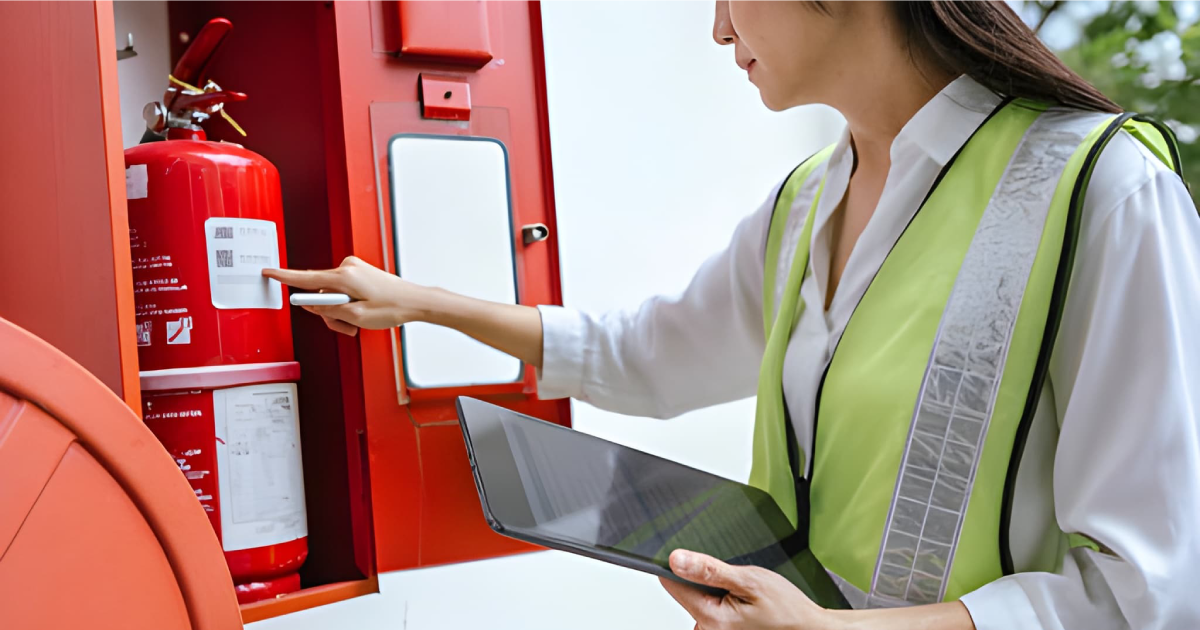
Portable fire extinguishers must be appropriate for the risks present and properly maintained.
Before inspection:
- Confirm that extinguishers are suitable for the environment
- Ensure annual servicing has been completed
- Check that extinguishers are accessible and correctly mounted
- Remove unnecessary or inappropriate equipment
Inspectors may question the presence or absence of firefighting equipment based on assessed risks.
Step 8: Review Fire Safety Training and Information
Inspectors often assess whether staff understand fire safety procedures.
Preparation should include:
- Providing fire safety training to employees
- Conducting regular fire drills where appropriate
- Ensuring staff know evacuation procedures
- Appointing and training fire wardens if required
Lack of staff awareness can undermine even well-designed safety systems.
Step 9: Maintain Documentation and Records
Fire safety inspections are evidence-based. Inspectors will request documentation to support compliance claims.
Key records include:
- Fire Risk Assessment
- Alarm and emergency lighting test logs
- Maintenance and servicing certificates
- Training records and drill logs
Missing or incomplete records often result in enforcement notices.
Step 10: Conduct a Pre-Inspection Review
A pre-inspection review or internal audit can identify issues before inspectors arrive. Many organizations use professional consultants to carry out compliance reviews.
This proactive approach allows deficiencies to be corrected in advance and demonstrates commitment to safety.
Common Reasons Commercial Properties Fail Inspections
Commercial properties often fail fire safety inspections due to:
- Outdated Fire Risk Assessments
- Poor fire door maintenance
- Obstructed escape routes
- Inadequate record keeping
- Lack of staff training
Most failures are preventable through regular review and management.
Consequences of Non-Compliance
Failure to prepare for a Fire Safety Inspection for Commercial Property can result in:
- Enforcement notices requiring immediate action
- Prohibition notices restricting building use
- Unlimited fines
- Prosecution of responsible persons
- Reputational and financial damage
Proactive preparation significantly reduces these risks.
The Role of Professional Fire Safety Support
Professional fire safety consultants help businesses prepare for inspections by identifying gaps, improving documentation, and ensuring systems meet legal requirements.
Professional support provides confidence that fire safety arrangements are robust, compliant, and regulator-ready.
Conclusion
Preparing for a Fire Safety Inspection for Commercial Property is an essential part of responsible business management. By maintaining up-to-date Fire Risk Assessments, ensuring systems are functional, keeping records accurate, and training staff, businesses can demonstrate compliance and protect occupants effectively.
Proactive fire safety preparation not only reduces the risk of enforcement action but also supports long-term safety, resilience, and operational continuity.